
Hershey cuts 2026 growth forecast as Halloween candy prices rise
Cocoa supply issues and weather disruptions have driven candy costs up, prompting the company to lower its organic sales outlook for the year.
By Pablo Kuznetsov ·
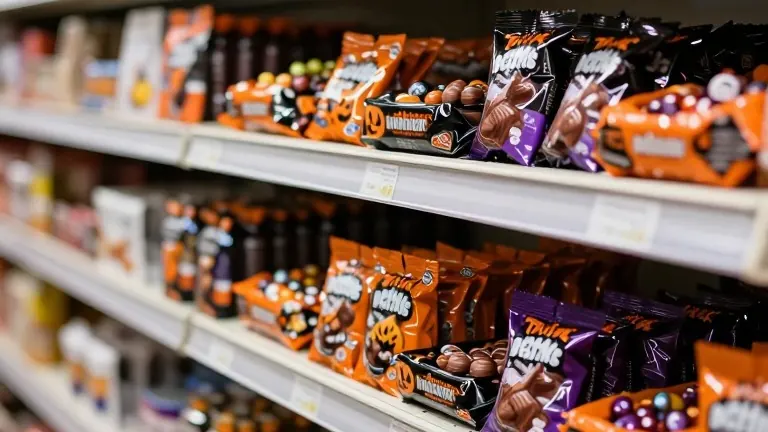
Halloween chocolate sales are projected to drop by $33.1 million this year compared to last season, according to data from NIQ. This decline in dollar value marks a sharp reversal for a category that typically sees strong seasonal growth. The financial hit is concentrated in milk chocolate, which accounts for a $34.4 million drop in revenue. Dark chocolate offers a small offset, gaining $2.3 million in sales. These figures represent the first nine weeks of the Halloween trading period, ending on October 17.
The National Retail Federation expects total American spending on Halloween to reach $13.5 billion this year. That figure exceeds the previous record of $13.1 billion set last year. Allison Zeller, vice president of industry and consumer insights at the NRF, noted that consumers still prioritize the holiday but are watching their budgets closely. Inflation has pushed up costs across the board, from costumes to pumpkins. The average retail price of a pumpkin reached $5.36 this year. That is an 11% increase from September 2020. Drought conditions in Texas reduced pumpkin yields by roughly 30% to 40%.
Candy prices have risen faster than broader food inflation, though the rate of increase has slowed. Consumer Price Index data shows candy and chewing gum prices up 7.7% in September compared to the same month last year. The sugar and sweets category rose 5.5% over that period. Weather disruptions played a key role in these increases. Unusually wet conditions in Brazil disrupted sugarcane harvests. Drought and other extreme weather events affected production in other major growing regions. Richard Volpe, a food economist, observed that candy has become one of the more expensive categories in grocery stores. He noted that his personal candy supply has dwindled to just three bags as the holiday approaches.
Cocoa supply issues have made chocolate particularly vulnerable. Poor growing conditions in Côte d'Ivoire and Ghana disrupted output in West Africa. A potential El Niño and dry Harmattan trade winds threaten the 2026-27 crop. David Branch, sector manager at the Wells Fargo Agri-Food Institute, said the worst of the cocoa crisis has passed. However, price relief has not yet reached store shelves. Chocolate prices are estimated to be about 8% higher than last Halloween. Effective transaction prices rose roughly 5% to 8% after promotions. Much of the chocolate on shelves was produced using cocoa bought six to 12 months earlier.
Shoppers are adjusting their habits in response to higher costs. NIQ data shows small candy packs of nine ounces or less are up 24% in dollar terms. Sales of these smaller units rose 14%. Every larger package size is declining. Retailers such as Walmart and Target are offering flash deals and heavy discounts to drive traffic. Consumers are also shifting toward products that use less cocoa. Gummies, sour candy, wafers, and caramel are seeing increased demand. Branch stated that shopping baskets will likely contain fewer chocolate pieces and more value packs.
Hershey reported third-quarter results on Thursday. The company lowered its 2026 organic sales growth forecast to 3% from a previous range of 3% to 3.5%. This change implies flattish organic growth in the fourth quarter, according to Scott Marks, an analyst at Jefferies. Marks described the company's commentary as incrementally cautious. He pointed to consumer and cost pressures weighing on the near-term outlook. Kirk Tanner, Hershey's CEO, told analysts that consumers in the convenience sector are under pressure to seek value. He said this is driving pricing through bespoke promotions rather than overall price decreases.
Hershey stock rose on Friday as investors moved away from artificial intelligence stocks toward consumer staples. Despite the share price gain, analysts are adjusting their expectations downward. Marks cut his price target on the stock to $170. Other brokerages including DA Davidson, BNP Paribas, Bernstein, and Deutsche Bank also lowered their targets. Consensus estimates for 2027 earnings fell 3.7% to $9.49 a share, according to FactSet data.
Source: CNBC
More Business · Consumer Watch · Report a business · Got a Story?