Canada-UAE Trade Pact Cuts Tariffs and Opens Extradition Talks
Prime Minister Mark Carney finalized a comprehensive economic partnership after a two-day visit by the Emirati crown prince.
By Bianca Ricci ·
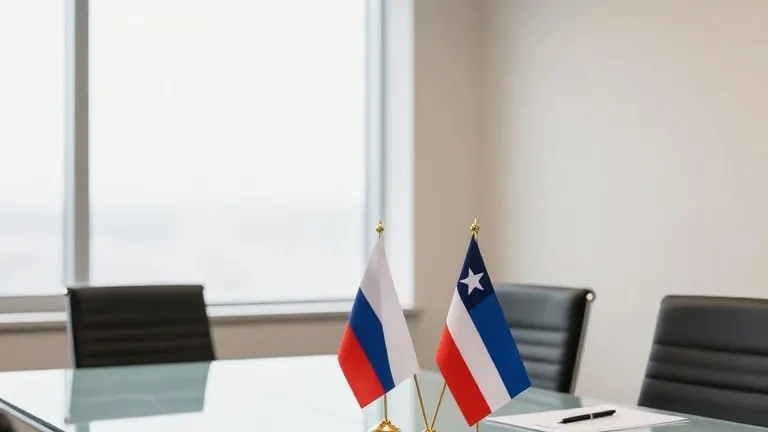
Canada and the United Arab Emirates signed a comprehensive free trade agreement on Tuesday. The deal eliminates tariffs on more than 99 percent of Canadian exports to the UAE beginning next year. Ottawa also opened negotiations on an extradition treaty that would allow Abu Dhabi to request the transfer of individuals accused of crimes.
Prime Minister Mark Carney announced the agreements following a two-day visit to the capital by Khaled bin Mohamed bin Zayed Al Nahyan. This was the first trip to Ottawa by an Emirati crown prince. During the meeting, the leaders also signed a memorandum of understanding to establish a Joint Military Committee. The committee will oversee military education, joint exercises, cybersecurity, and information exchanges.
The trade pact, known as the Canada-UAE Comprehensive Economic Partnership Agreement, was negotiated in 47 days. This timeline represents a record for both nations. Carney stated that the agreement opens new markets for Canadian producers of pulses, canola, industrial machinery, power generation equipment, and aerospace goods.
Maninder Sidhu, the minister of international trade, projected that the deal will double two-way trade from $2.4 billion to nearly $5 billion over the next decade. He noted that the agreement provides Canadian firms with greater access to the UAE economy, which is valued at $500 billion.
The trade deal follows a $50 billion investment pledge made by the UAE a year ago. That commitment targets Canadian energy and development projects, particularly in the Arctic region. Carney said the current discussions delivered progress on that pledge, though he did not specify details. The statement marked a shift from previous interactions focused on securing foreign capital.
Stuart Trew, director of the Trade and Investment Research Project at the Canadian Centre for Policy Alternatives, criticized the timing of the extradition talks. He described the UAE as a paranoid surveillance state. Trew questioned the logic of deepening defense ties with a country he accused of fomenting conflict across Africa. Rights groups have reported evidence that the UAE finances the Rapid Support Forces in Sudan, a group accused of genocide. The UAE denies involvement in the civil war.
The agreement aligns with Carney’s strategy to diversify Canada’s trade partnerships after strained relations with the United States. Carney declared the old Canada-US relationship over in May 2025. US tariffs imposed in March 2025 currently apply at 25 percent to most Canadian goods and 10 percent to Canadian energy. Carney’s office stated that Canada now holds preferential access to 1.5 billion consumers across 16 free trade agreements in 51 countries.
Recent diplomatic efforts include a visit to China, where Beijing lowered tariffs on Canadian canola oil to 15 percent. In exchange, Canada agreed to import 49,000 Chinese electric vehicles. Carney also visited Doha in January and Saudi Arabia in July, where he secured 13 commercial agreements worth $700 million. Talks on a free trade agreement with Turkey began last week. Kuwait and Canada signed a defense and security memorandum in September.
Trew called the government’s approach a confusing strategy. He argued that officials have exaggerated Canada’s need for foreign funding. He noted that automobiles remain Canada’s second largest goods export after energy. Trew maintained that no other trade relationship can fully replace the volume of commerce with the United States.
Source: Middle East Eye
More Business · World news · Consumer Watch · Report a business · Got a Story?