China Promotes General Zhang to Politburo, Tightens Party Discipline
A four-day closed-door session elevated the only remaining military general to the top governing body and adopted new resolutions on anti-corruption.
By Chloe Martin ·
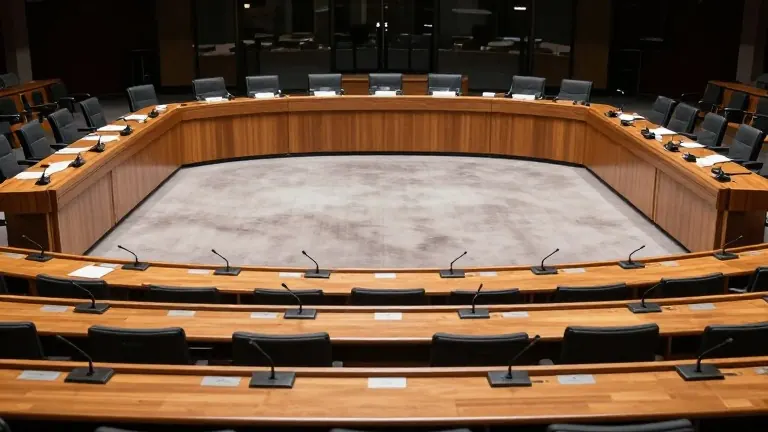
China’s leadership elevated General Zhang Shengmin to the Politburo on Thursday, filling the sole military seat on the Communist Party’s top governing body. The move followed a four-day closed-door meeting where top leaders also adopted a resolution aimed at strengthening internal discipline and self-governance. This session sets the strategic direction for the party in the years ahead, occurring roughly one year before President Xi Jinping is expected to secure a fourth five-year term as leader.
The promotion addresses a gap created by recent personnel shifts within the military hierarchy. Xi previously removed two senior generals from the Central Military Commission. Those departures left Zhang as the only member of that commission besides Xi himself. The removals also left the Politburo without any representatives from the People’s Liberation Army. Zhang currently serves as vice chairman of the Central Military Commission. He also holds a role overseeing internal military discipline as deputy secretary of the CMC Commission for Discipline Inspection.
The party issued a summary of the resolution stating that its tasks have become increasingly arduous. The document cites the need to unite and lead the people in safeguarding national sovereignty, security, and development interests. It mandates a step-up in self-governance to root out corruption and maintain ideological purity. The text calls for enhancing long-term governance capacity and maintaining close ties with the populace.
Xi has championed anti-corruption efforts since assuming power in 2012. The crackdown on officials has continued for over a decade. Analysts note that the focus has expanded to include underperforming officials alongside those accused of corruption. During the plenum, party members reviewed and confirmed the earlier purges of top members and military officials. This formalized the personnel changes that altered the composition of the leadership bodies.
Neil Thomas, a senior fellow at Asia Policy who studies Chinese politics, analyzed the meeting’s attendance figures. He calculated a 74 percent attendance rate. Thomas described this figure as the lowest since the era of former leader Mao Zedong, who regularly conducted political purges. He characterized the scope of the recent purges as wider than expected. The data reflects a significant shift in the party’s internal dynamics and leadership structure.
The resolution guides the party’s approach to internal management and external strategy. It emphasizes the need for maintaining progressive nature and purity. The party intends to use these measures to consolidate its grip on power. The meeting concluded with the adoption of these key resolutions and the confirmation of the new Politburo member.
Source: WVIZ