Quarter Century Ago, a Pocket-Sized Jukebox Redefined How the World Carried Music
Twenty-five years ago, a $399 device with 5GB of storage promised to fit an entire music library into a package no larger than a deck of cards, fundamentally altering the portable audio market.
By Bianca Ricci ·
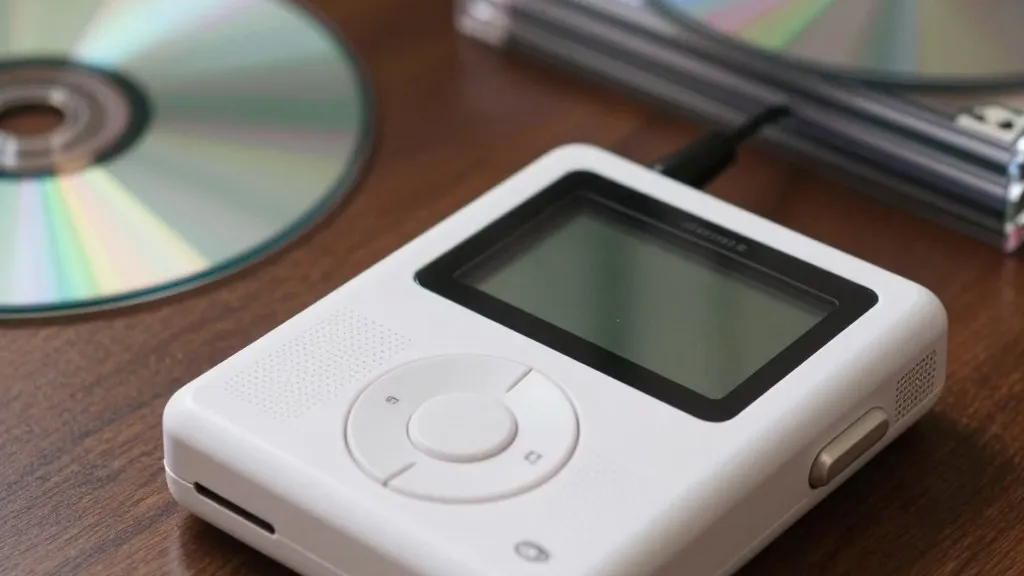
It has been exactly 25 years since a small, white gadget shattered the status quo of the digital music industry. On this day in 2001, Apple CEO Steve Jobs unveiled a device that would become a cultural icon, offering a solution to a problem consumers faced with existing technology: the inability to carry a meaningful music collection without the bulk of CDs. The original iPod launched at a price of $399, with the bold promise that it could hold 1,000 songs. For many users, that capacity represented their entire library, tucked into a pocket-sized form factor that was lighter than most cell phones of the era.
To understand the impact of this release, it is necessary to look back at the state of the market in October 2001. Apple had already established its footing in the post-dot-com era, having successfully transitioned the company beyond beige hardware into the Mac OS X era with the iMac and iBook. Jobs had previously predicted that the Mac would serve as the central hub for a user's digital life, connecting devices like cameras and DVD players. He reasoned that music was the ideal entry point for this ecosystem because it was a massive target market lacking a definitive leader. Although competitors like Sony, Creative, and Sonic Blue had portable players, Jobs argued that none had yet found the correct recipe for digital music.
The device itself was introduced as an MP3 player capable of CD-quality sound and compatible with standard formats like WAV and AIFF. The technical breakthrough that enabled the device's compactness was a 1.8-inch hard drive manufactured by Toshiba. This component was only 0.2 inches thick, allowing Apple to construct a unit measuring 2.4 by 4 by 0.78 inches and weighing just 6.5 ounces. The storage capacity was 5GB, which at the time translated to approximately 1,000 pop songs encoded at 160Kbps. Jobs emphasized that this was the optimal market entry point compared to the four other mainstream solutions available at the time: CD players, MP3 CD players, flash players, and other hard disk-based jukeboxes.
A critical differentiator highlighted during the launch was the speed of data transfer. The iPod was the first music player to utilize FireWire 400 for charging and file transmission. While USB connections of that era could take up to five minutes to transfer a single CD of MP3s, the FireWire connection allowed for the transfer of an entire CD in as little as five to 10 seconds. Filling the device with its full 1,000-song capacity was estimated to take only 10 minutes, a drastic improvement over the five hours required for typical USB-based players of the time. The device also featured 20-minute skip protection and a rechargeable lithium-polymer battery that provided 10 hours of continuous playback, with the ability to recharge to 80% in one hour.
The user experience was central to the product's appeal, featuring a design that Jobs described as minimal and durable. The interface included a scroll wheel with a piezoelectric clicker for tactile feedback, allowing for one-handed navigation by playlist, artist, or song. The device also served a dual purpose as a FireWire hard disk drive. Simultaneous with the hardware launch, Apple released iTunes 2, which introduced features like MP3 CD burning and, crucially, Auto-Sync. This feature ensured that the customized libraries curated on a Mac would remain synchronized with the portable player every time it was connected for charging or transfer.
During the unveiling, the first song demonstrated on stage was 'Building a Mystery' by Sarah MacLachlan. The device quickly became the preferred carry-along gadget for enthusiasts, bridging the gap between the desktop and the eventual dominance of the smartphone. The iPod line remained a staple of the Apple product stack for over a decade, even after the introduction of the first iPhone in early 2007. While the two devices coexisted, the iPod's relevance gradually diminished as smartphones matured. The final model, the 7th-generation iPod Touch, was released in May 2019. Although the line was left unmaintained for some time, it was not officially discontinued until May 2022, marking the end of an era that began with a simple promise: music for everyone, in your pocket.
Source: Tom's Hardware · original report published