Johnson's warning: France chaos and DSA control if GOP loses House
The Speaker detailed the 'dark harbinger' of European unrest and the DSA threat in a final bid to hold the chamber, but results show Democrats taking control.
By Pablo Kuznetsov ·
Speaker Mike Johnson stood in Cincinnati on Tuesday, a day before the decisive vote, and painted a stark picture of what he believed would happen if Republicans lost control of the House. In a USA Today op-ed and interviews on Fox News, he warned that a Democratic victory would usher in a period of daily chaos and ideological dominance by the far left. He specifically pointed to recent unrest in France as a preview of the turbulence ahead, describing the violence there as a dark harbinger of what could unfold in the United States under Democratic leadership.
Johnson argued that even a narrow Democratic majority would be held hostage by the Democratic Socialists of America. He cited strategist James Carville's admission that the party would be held captive by its socialist wing if it won by a small margin. The Speaker described this dynamic as a fundamental shift in the party's identity, one that moves away from the center and toward a platform that calls for eradicating borders and abolishing the Senate. He framed the upcoming election as a choice between preserving American foundations and dismantling them.
In his USA Today piece, Johnson highlighted the specific policy achievements of the 119th Congress to contrast against the Democratic agenda. He noted that Republicans had delivered $4.6 trillion in lower taxes, a $1.6 trillion reduction in wasteful government spending, and the lowest violent crime rate in 126 years. He also pointed to the creation of the first-ever nationwide school choice program and Trump Accounts for children. These accomplishments, he argued, were delivered despite the opposition forcing three government shutdowns, including the longest in U.S. history.
The Speaker emphasized the slimness of the Republican majority during his tenure, noting that it was the slimmest since the Great Depression. He credited his leadership with navigating this tight margin to pass historic legislation, including the Working Families Tax Cuts. He stated that Americans were keeping more of what they earned, with an average $10,900 boost in take-home pay for a family of four. This financial relief, he said, was a direct result of no tax on tips and overtime, a bigger standard deduction, and an expanded child tax credit.
On Fox News, Johnson warned voters that a Democratic Congress would bring about chaos every day for two years. He described the incoming group as angry Democrats seeking retribution against President Donald Trump and his administration. He predicted they would try to open the borders wide and repeal the Working Families Tax Cut. He urged voters to remember that in 2024, ten House races were decided by 6,000 votes or less, making every single ballot matter in the upcoming contest.
The Speaker also addressed the economic conditions, asserting that Republicans had brought down costs and cut taxes with the largest tax cut in U.S. history. He claimed that people were looking at record over rhetoric, noting that Democrats had voted against these measures when they were proposed. He argued that the contrast between the two parties was clear, with one side focused on common sense and the other on what he described as absolute crazy. He noted that the Democratic Party was being taken over by the insurgent left, a trend he said voters were savvy enough to see.
Results began to come in across the Great Lakes and Ohio Valley regions as polls closed on Tuesday. In Ohio, polls closed at 7:30 p.m., and the Associated Press reported that Democrats had taken control of the state legislature and the governor's mansion. Amy Acton was projected to win the governor's race, defeating Republican Vivek Ramaswamy. In the Senate, Sherrod Brown, who had lost his seat two years ago, defeated Republican Jon Husted to reclaim the seat. These results marked a significant shift in Ohio's political landscape, which had been firmly in Republican hands for years.
In Michigan, where polls closed at 8 p.m., the Associated Press reported that Abdul El-Sayed defeated Republican Mike Rogers for the open Senate seat. This victory made El-Sayed the nation's first Muslim senator. The race was a focal point of the national battle for Senate control, with Democrats securing a breakthrough in a key swing state. The victory was seen as a validation of the progressive agenda that El-Sayed campaigned on, which included universal health care and removing outside money from elections.
In Kentucky, polls closed at 6 p.m., and the state held a Senate race for the open seat. Ballotpedia noted that the state had not elected a Democratic governor in a long time, but the Senate race was a key battleground. In West Virginia, polls closed at 7:30 p.m., and the incumbent, Shelley Moore Capito, was running for re-election. The results from these states contributed to the broader national trend of Democrats gaining seats in chambers and governorships across the country.
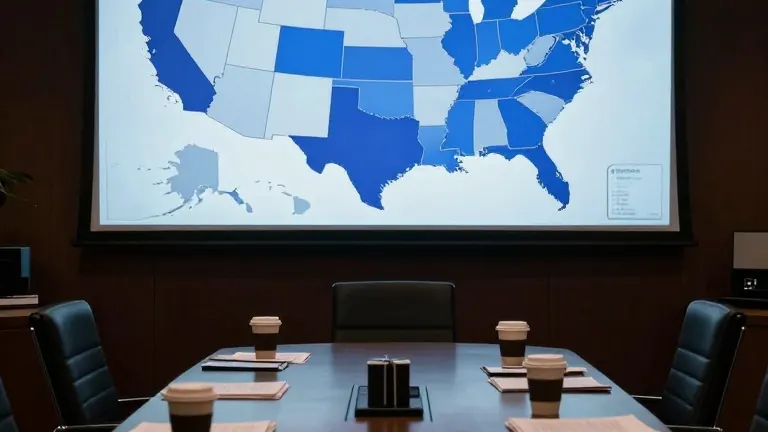
The Associated Press reported that Democrats had won a majority of governorships for the first time in two decades. This shift allowed them to put up a stronger defense against the president's second-term agenda. The victories included states like Texas and Georgia, where Democrats broke Republican control of state government. In Georgia, Keisha Lance Bottoms became the first Black woman to be elected governor in the U.S. In Texas, Gina Hinojosa defeated Greg Abbott, ending a 32-year losing streak for Democrats in statewide races.
Speaker Johnson's warnings of chaos and DSA dominance appeared to be prescient as the results solidified. The Associated Press noted that the Democratic sweep of the midterms was a shocking rebuke to Republican governance. The party had hoped that its record of results, including tax cuts and border security, would be enough to retain control. However, the electorate's frustration over high prices and the war in Iran seemed to drive the decisive change. The new congressional leadership would now face the challenge of opposing the president while managing a diverse coalition of voters.