Stargate Project to Boost Saline Township Tax Revenue to $10 Million
A new data center is projected to triple local tax collections while employing 450 people, a benefit that has not yet outweighed the opposition of nearly two-thirds of Michigan residents.
By Bianca Ricci ·
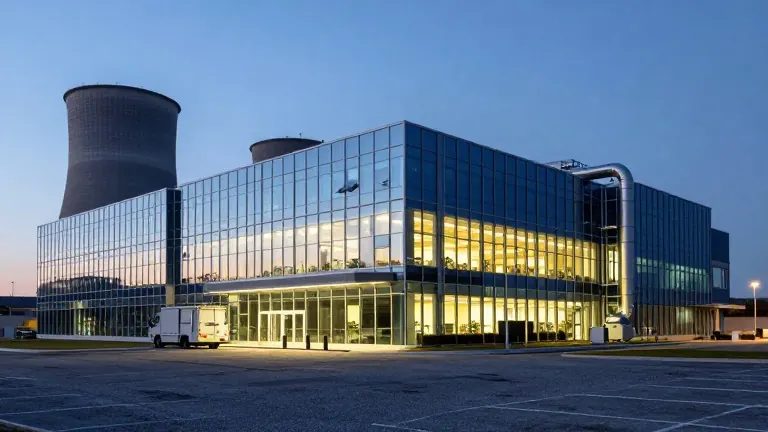
Annual property tax revenue in Saline Township is projected to rise from a few hundred thousand dollars to more than $10 million once Oracle and OpenAI complete the Stargate data center. Jeff Guilfoyle, a senior strategist at Public Sector Consultants, cited this shift during a panel discussion in Detroit. The facility is also expected to provide permanent employment for 450 workers and support thousands of temporary construction positions.
Despite these financial gains, the project sits at the center of a growing conflict over data center development in Michigan. Recent polling indicates that nearly two-thirds of state residents oppose the construction of new computing facilities. This opposition has intensified pressure on lawmakers to regulate the industry more strictly, a shift that occurred just two years after state legislators approved tax breaks designed to attract developers.
The debate was a primary focus of the inaugural Bridge Michigan Issues Summit held at Marygrove Conservancy. The half-day event capped Bridge Listens, a yearlong journalism project based on survey responses from more than 6,400 readers. Environmental topics, including the impact of data centers, ranked highly on the list of concerns provided by those readers. More than 375 people attended the summit in Detroit or via virtual watch parties.
Michelle Martinez, director of the University of Michigan Tishman Center for Social Justice and the Environment, argued that the initial tax exemptions opened the floodgates for development without adequate resident input. She stated that many people felt blindsided by the scope and speed of the approvals. Martinez noted that the lack of clear channels for public voice contributed to the current tension between economic goals and environmental realities.
Brenda Stumbo, a Ypsilanti Township supervisor, echoed these concerns. She described the state's approval process as rushed, noting that local officials were left to negotiate details with some of the world's wealthiest companies without prior consultation from voters. Stumbo said that when decisions are made quickly, the results often do not go well for the communities involved.
Erik E. Nordman, director of Michigan State University’s Institute of Public Utilities, addressed the energy implications of the expansion. A single 1-gigawatt facility requires as much power as a large U.S. city. Nordman explained that while increased demand can sometimes lower residential rates by spreading infrastructure costs, it has also driven rates up in areas where data center demand exceeds grid capacity.
Nordman indicated that Michigan’s rate structures may protect residents from some cost shifts, as state policy prevents utilities from forcing other customers to pay for data center investments. However, he expressed skepticism about meeting the state’s 2040 clean energy mandate. He described the task as very difficult because demand growth was previously flat. Martinez added that data center demand in other states, such as a 424-gigawatt backlog in Texas, will likely drive new fossil fuel investments that affect the air quality in Michigan.
The panelists presented differing views on the long-term economic and environmental trade-offs. Guilfoyle emphasized the community drivers provided by the tax revenue and jobs from projects like Stargate. Nordman and Martinez focused on the strain on energy grids and the climate impacts of increased power consumption. The discussion highlighted the complexity of balancing high-tech ambitions with the state's existing energy and water realities.
Source: Bridge Michigan
More Business · Consumer Watch · Report a business · Got a Story?