Chicago River Receives 12 Billion Gallons of Raw Sewage This Year
Stormwater overwhelmed the city's tunnel system, forcing pumping stations to release untreated waste into the river more than in any year since 2019.
By Chloe Martin ·
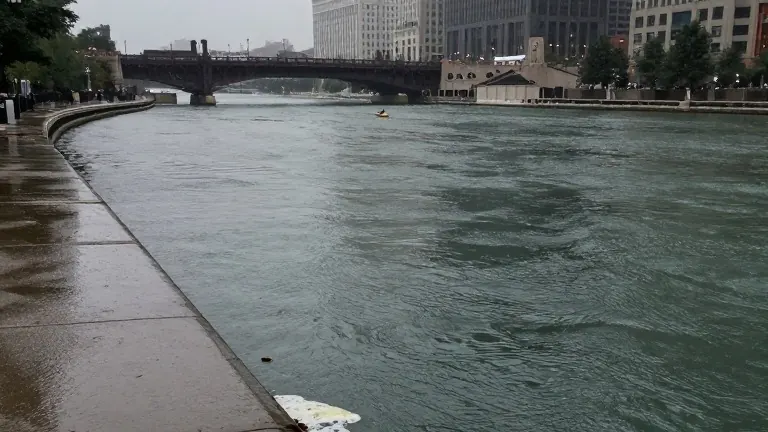
Chicago’s aging sewer infrastructure is struggling to manage the volume of water brought by intense storms, resulting in massive releases of untreated waste into the city's waterways. The Metropolitan Water Reclamation District of Greater Chicago reported that raw sewage has been discharged into the Chicago River at a rate not seen since 2019. This situation poses health risks to residents and wildlife while challenging the effectiveness of the city's long-term flood control projects.
The Racine Avenue pumping station on the South Side has discharged more than 10 billion gallons of sewage into the South Branch of the river this year. The North Branch pumping station near Lawrence Avenue has added nearly two billion gallons to the waterway. In total, these two stations have released approximately 12 billion gallons of untreated water. This volume exceeds the discharge levels recorded in any other year since 2019. The releases occur because heavy rains force the district to bypass treatment to prevent street flooding.
Joe Gamble, who works at the Bridgeport Art Center near Bubbly Creek, described the conditions after storms in early October. He noted that raw sewage floated in the creek and that the odor reached areas at least one block away. The waterway, which is popular with beginner paddlers due to its calm currents, becomes difficult to use after heavy rain. Gamble mentioned that the smell often lingers on his clothing even after he leaves the area. He works at the Chicago Maritime Museum and stated that the intensity of the odor is distinct from typical urban smells.
The primary cause of these discharges is the combined sewer system, which carries both wastewater and stormwater through a single pipe network. When rain falls faster than the system can handle, the water reclamation district releases the mixture into the river. The city has relied on the Deep Tunnel project, a network of over 100 miles of underground tunnels and reservoirs, to store floodwater. However, the system is being overwhelmed by current weather patterns. The Thornton reservoir in South Holland filled for the first time since its 2015 opening this summer, holding nearly eight billion gallons of water. The McCook reservoir in Bedford Park reached capacity ten times this year, a sharp increase from the five times it filled between 2017 and 2023.
Water quality experts warn that the influx of sewage depletes oxygen levels in the river, leading to the death of fish and other aquatic life. Phil Nicodemus, research director for Urban Rivers, explained that the nutrients in the sewage cause massive oxygen drops. He observed fish gasping for air near the surface during a survey near River Park. Austin Happel, a research biologist from the Shedd Aquarium, found that nitrogen levels rose and oxygen levels fell significantly after a large spill in 2023. He noted that fish populations in affected areas did not return for weeks. Tara Hoffmann, executive director of Recovery on Water, expressed concern for her rowing team, which includes breast cancer survivors with compromised immune systems. She recalled a day in June when the women paddled through excrement and observed dead fish floating on the surface.
The water reclamation district operates under a binding agreement with the U.S. Environmental Protection Agency regarding federal clean water violations. District officials state that the current storm intensity exceeds the design capacity of the sewer system, which was built to handle two inches of rain per hour. This year, O'Hare Airport has recorded more than 37 inches of rain. The district has designed nearly 300 flood-mitigation projects, many of which remain in the planning stage. Margaret Frisbie, executive director of Friends of the River, said that engineering solutions alone may not be sufficient to address the problem. She advocated for a mix of smaller projects, including green spaces and structures that capture rainwater before it enters the sewers.
Source: Chicago Sun-Times