Democrats Favored to Take House as Trump's Approval Slides
Historical trends and current polling suggest Republicans will lose seats, though structural advantages limit the potential scale of the Democratic gain.
By Chloe Martin ·

President Donald Trump faces a difficult path to re-election for his party in the upcoming midterms, with record-low approval ratings and persistent inflation driving voter dissatisfaction. The administration’s decision to engage in a war with Iran and implement new tariffs has directly increased costs for energy and goods, a burden that regular Americans are feeling more acutely than the wealthy. While stock portfolios dominated by artificial intelligence companies have boosted the fortunes of the rich, the general population is struggling with a labor market that is not keeping pace with rising prices.
The latest NPR, PBS News, and Marist poll indicates that 44% of Americans say their financial situation has remained largely unchanged, while 38% report that it has worsened. Only 15% believe their economic standing has improved. This economic strain is compounded by disapproval of the administration’s hard-line immigration enforcement and cuts to domestic spending programs such as Medicaid. These factors are energizing Democratic voters and angering swing voters who may have supported Trump in 2024.
History suggests the president’s party will likely lose seats. Since World War II, the president’s party has gained House seats in midterm elections only twice. On average, the party in power loses 26 seats in these cycles. The losses are steeper when the president’s approval rating falls below 50%, a threshold Trump has crossed. In those instances, historical data shows an average loss of 35 seats, compared to 15 when approval ratings remain above 50%. Trump has acknowledged these historical odds multiple times during campaign events.
Democrats have shown political strength in recent off-year and special elections, outperforming expectations. However, the scope of their potential gains is constrained by structural factors. According to the Cook Political Report, there are approximately 30 fewer competitive districts this year than in 2018. Additionally, mid-decade redistricting efforts have provided Republicans with an estimated net advantage of eight seats. Trump pushed state legislatures to adopt maps that favored his party, a strategy that has insulated some Republican incumbents from the wave of negative sentiment.
The Democratic Party faces its own internal challenges, as it struggles to unify a base of voters who are restive with the party’s direction. Self-identified democratic socialists show high engagement and strong disapproval of Trump’s performance. Polls indicate that 44% of respondents view their vote as a choice against Trump, while 21% see it as a vote for him. This group is expected to turn out in large numbers to check the administration, though tensions may arise as the party prepares for the 2028 presidential primaries.
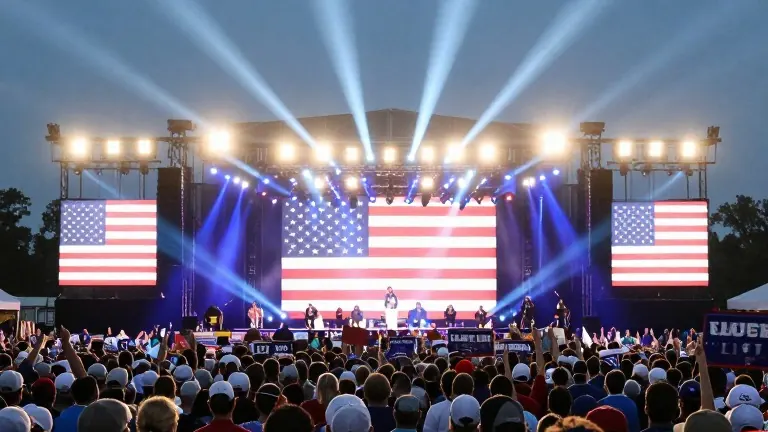
Republican turnout will determine the final balance of power. Trump has traveled to red states to urge his base to vote, recognizing that low turnout could allow Democrats to expand their Senate gains from one or two seats to six or seven. If Democrats do not win the House, it would represent a significant polling error. The 2028 election cycle will begin immediately after these midterms, with candidates expected to announce their runs as early as January or February to gain a national profile.
Election night results may not be definitive for days or weeks, particularly in close Senate races. Trump has already begun laying the groundwork for claims of irregularity, a pattern established after previous elections. While most voters across the political spectrum believe their states will conduct fair elections, a quarter of Republicans said their candidate should not accept the results if they are close. This division leaves room for misinformation and potential chaos if the margins are narrow.
Republican candidates have largely removed mentions of Trump from their advertisements, a shift from the high frequency of references during the primaries. Party insiders privately describe the president as a double-edged sword, essential for motivating the base but toxic for swing voters. The economic pressure on families and the ongoing conflict in Iran have caused Trump’s support among 2024 crossover voters to decline sharply, setting the stage for a competitive but difficult environment for the GOP.
Source: WCBE