Boston Dynamics Executives Defend $1.3 Million Robot Dog Sale to ICE
Company leaders confirmed the contract despite a 300-person staff petition demanding the deal be halted.
By Pablo Kuznetsov ·
More than 300 employees at the robotics firm Boston Dynamics signed a petition urging executives to stop selling the company’s quadruped robots to US Immigration and Customs Enforcement. The letter, which included half anonymous signatures, was sent to company leadership in early September. Staff members shared copies of the document with The Boston Globe and WBUR public radio station to make the internal dissent public.
The dispute centers on a Department of Homeland Security contract awarded on September 25. The agreement grants $1.3 million to Radeco, a Connecticut-based company, to supply ICE with modified versions of Boston Dynamics’ Spot robots. Boston Dynamics has a total workforce of approximately 1,400 people, meaning the signatories represent a substantial portion of the company’s internal staff.
Executives have stood by the transaction. They stated that the robots would not be weaponized, a clarification offered in response to employee concerns. The company leaders maintained the deal’s integrity despite the internal pushback from the majority of the petition’s signatories.
The petition argued that the association with ICE posed a major risk to the company’s reputation. It noted that many staff members received messages from friends and family expressing disbelief and horror at the news. The signatories described themselves as people who enjoy showing off their innovations and changing the perception of what robots can do. They felt the risk was too great to continue with the deal.
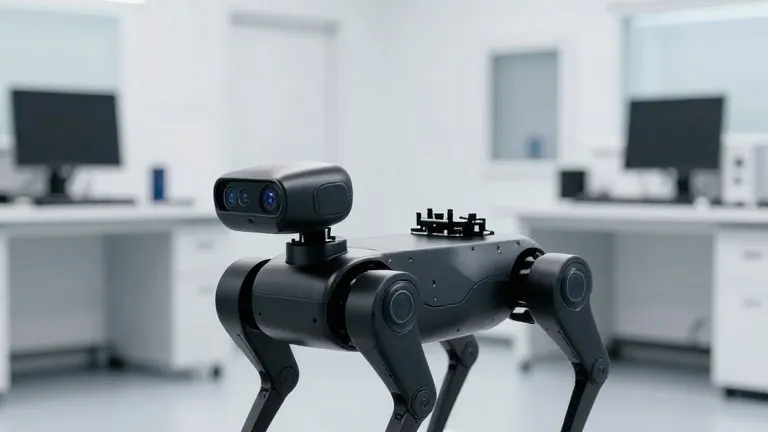
The specific hardware involved in the contract is a modified version of the Spot robot marketed by Radeco as the Cerberus platform. The contract covers the purchase of four of these units. According to the contract details, the Cerberus robots are intended for remote observation and inspection missions. They are designed to detect radiation, toxic gas leaks, and explosive threats in urban environments or disaster zones.
The upgraded robot features several specific sensors. A key component is an oxygen sensor intended to ensure air quality is breathable when personnel enter confined spaces like tunnels. The platform also includes a camera with 30-times zoom capability, 360-degree cameras, and infrared thermal imaging.
The contract does not specify a deployment timeline for the four Cerberus units. It also does not detail the specific locations where ICE will utilize the robots for inspection missions.
Source: Ars Technica