Humanoid Robotics: Tesla Delays Optimus External Deliveries to Late 2027
Tesla’s CEO confirms that hardware reliability and AI generalization issues have pushed the first external Optimus sales to the end of next year, a timeline now rivaling competitors.
By Bianca Ricci ·
Tesla has officially pushed the start of external deliveries for its Optimus humanoid robot to late 2027, a timeline that aligns more closely with its primary competitors than previously suggested. During the company’s Q3 2026 earnings call, CEO Elon Musk stated that the robot’s hands, durability, and artificial intelligence require significant development before the unit can be sold to outside customers. This delay marks a notable shift from earlier projections that aimed for broader commercial availability by 2026.
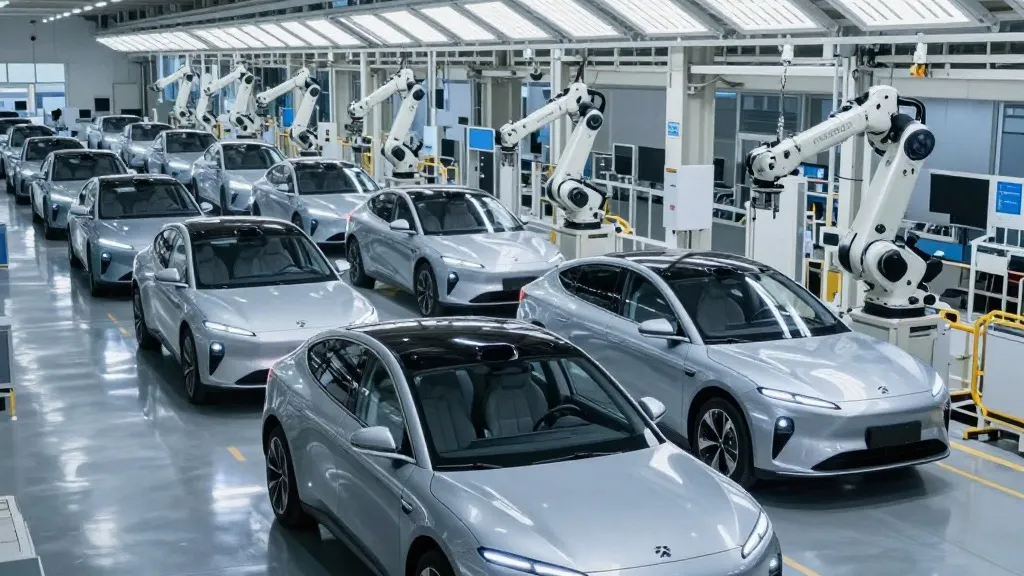
The production infrastructure is already in place, with early manufacturing occurring on the high-volume line in Fremont, California, where the Model S and Model X were previously assembled. Tesla has installed most of the equipment necessary to reach a theoretical capacity of one million robots per year, or approximately 20,000 units per week. However, Musk noted that reaching this rate will take at least a year, possibly longer, because parts of the design are still undergoing changes. The company plans to integrate its AI5 chip into the Optimus platform around April 2027 to further enhance processing capabilities.
The primary obstacles cited by Tesla are the electromechanical design, specifically the hand, and the reliability of the robot over extended periods of use. An Optimus engineer noted that the hand is one of the most difficult hardware areas, requiring custom gears and fingers that are soft enough for delicate tasks yet durable enough to withstand constant wear. Musk emphasized that unlike human skin, robot fingers cannot heal, making the balance of flexibility and durability a critical engineering challenge. Additionally, the AI architecture must be refined to allow the robot to handle tasks it has not previously encountered.
To address the AI gap, Tesla is planning to build 10,000 to 20,000 robots that will practice tasks in a facility known as the Optimus Academy. This approach is necessary because Tesla lacks a fleet of robots collecting real-world data in the same way its vehicles do for Full Self-Driving. Musk promised to release a video within the next one to two months showing the robot performing unscripted tasks, aiming to demonstrate that the AI can generalize beyond pre-programmed routines. This move is a direct response to criticisms that previous humanoid demonstrations relied on scripted actions that would not hold up in real-world conditions.
This delay continues a pattern of shifting timelines for the Optimus project. In 2024, Musk suggested high-volume production for other companies by 2026, and in January 2025, he projected the construction of 10,000 units that year. However, the company’s own Q3 shareholder letter acknowledges that the current units coming off the Fremont line are the first to be considered production-quality. This implies that all previous iterations were prototypes or pre-production models, highlighting the steep learning curve associated with scaling humanoid robotics.
Competitors are advancing their own humanoid programs on similar or slightly more aggressive timelines. XPeng activated an automated production line for its IRON robot in Guangzhou in September, with plans for mass production by the end of 2026 and deliveries to stores and malls in the first half of 2027. Boston Dynamics, meanwhile, began producing its electric Atlas robot in January and has secured all 2026 deployments, including a partnership with Google DeepMind. Hyundai, which owns Boston Dynamics, plans to deploy 25,000 robots across its plants over the next few years.
Boston Dynamics has taken a pragmatic approach to the hand problem by prioritizing sturdy grippers suitable for industrial parts over human-like dexterity. This strategy allows the company to bypass the specific dexterity challenges that Tesla cites as its main hurdle. Furthermore, Boston Dynamics hired Milan Kovac, Tesla’s former head of Optimus, in January, suggesting a transfer of key knowledge between the two rivals. These developments challenge Musk’s assertion that no other company is close to Tesla in the general-purpose humanoid robot space.
The stakes for Tesla are high as it attempts to transition from a vehicle manufacturer to a robotics leader. While the company may have built the most robots, the core challenge remains making them useful and reliable enough to pay for themselves. As the industry moves toward 2027, the focus shifts from mere construction to operational efficiency. If Tesla’s upcoming video demonstrates genuine, unscripted capability, it could validate the late-2027 delivery target. Otherwise, the timeline may slip again, keeping the Optimus in the realm of promising prototype rather than practical industrial tool.
Source: Electrek · original report published