Ohio Hunters Face New Testing Rules As Two Deer Diseases Spread
Wildlife officials are tracking hemorrhagic disease and chronic wasting disease, with mandatory testing for deer in nine western counties.
By Chloe Martin ·
Wildlife officials in Ohio are tracking two distinct diseases that threaten the state's deer herds. One illness strikes quickly, while the other settles into the environment and persists for years. Clint McCoy, the deer program administrator at the Ohio Department of Natural Resources, explained that the two conditions present different challenges for management and survival.
Hemorrhagic disease acts as the immediate threat. A virus carried by a tiny midge causes the illness, which devastated populations in southern Ohio last year. This year, the virus expanded into northern regions, including Lorain and Portage counties. McCoy noted that warmer weather favors the midge populations, a trend he links to climate change. However, he said the long-term impact is less severe because surviving deer build antibodies that protect them from future infection.
Citizens are asked to report any dead or sick deer they find to help officials map the spread of the virus. This data helps the department understand where the midge-borne illness is active. The rapid cycle of the disease means that while it kills many animals in a short window, the herd can recover more quickly than with other ailments.
Chronic wasting disease presents a slower but more permanent problem. It is caused by a prion, an aberrant protein fragment that lodges in the brain of infected animals. McCoy stated that the disease spreads when deer contact other infected animals or through contaminated soil, water, or plants. Once established, the prions can remain in the soil for years, making eradication impossible.
The disease is fatal, but it can take up to 18 months to kill the host. During that time, the animal continues to spread the prion to the surrounding herd. Hunters are advised not to consume meat from infected deer, although it remains unknown if the prion can infect humans. Around 220,000 deer are harvested in Ohio every year, making testing a key part of surveillance.
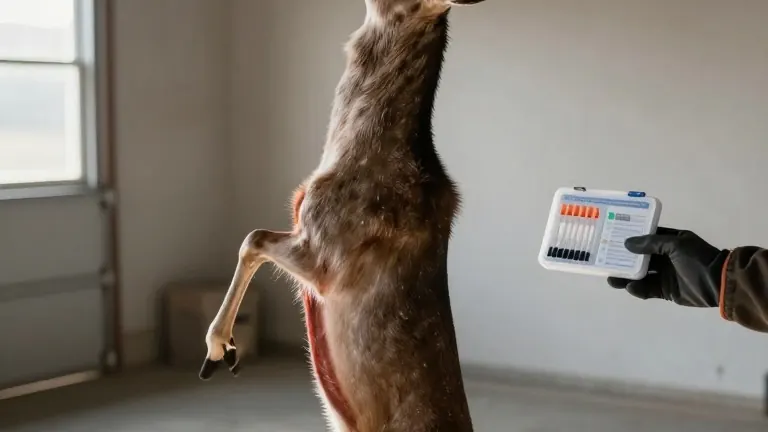
Starting at the beginning of gun season later this month, hunters must submit deer taken in four western Ohio counties for CWD testing. The surveillance zone includes all of Allen, Hardin, Marion, and Wyandot counties. It also covers portions of Crawford, Morrow, Delaware, Union, and Hancock counties. McCoy emphasized that detection almost always leads to spread, a pattern seen wherever the disease has been found in the country.
The testing requirement places a specific burden on hunters in these nine designated areas. They will turn in their deer for analysis to monitor the prevalence of the prion. This effort aims to track how far the chronic wasting disease has moved through the state's western regions.
Source: WOSU-FM