36 Governor Races: The Split, Battlegrounds and Open Seats on Election Day
Republicans and Democrats each hold 18 governorships up for vote, with nine states seen as key contests in the Great Lakes and beyond.
By Pablo Kuznetsov ·
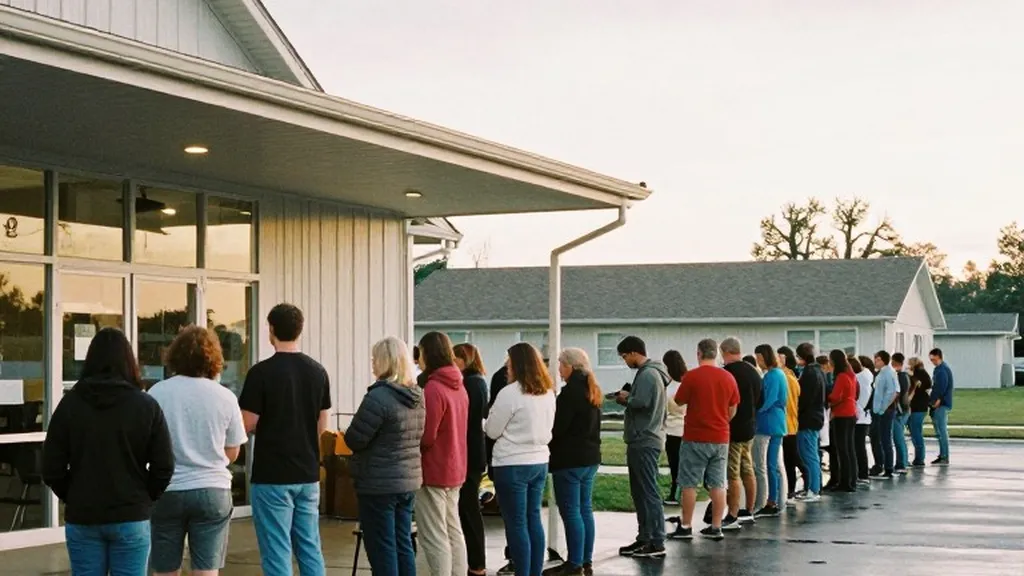
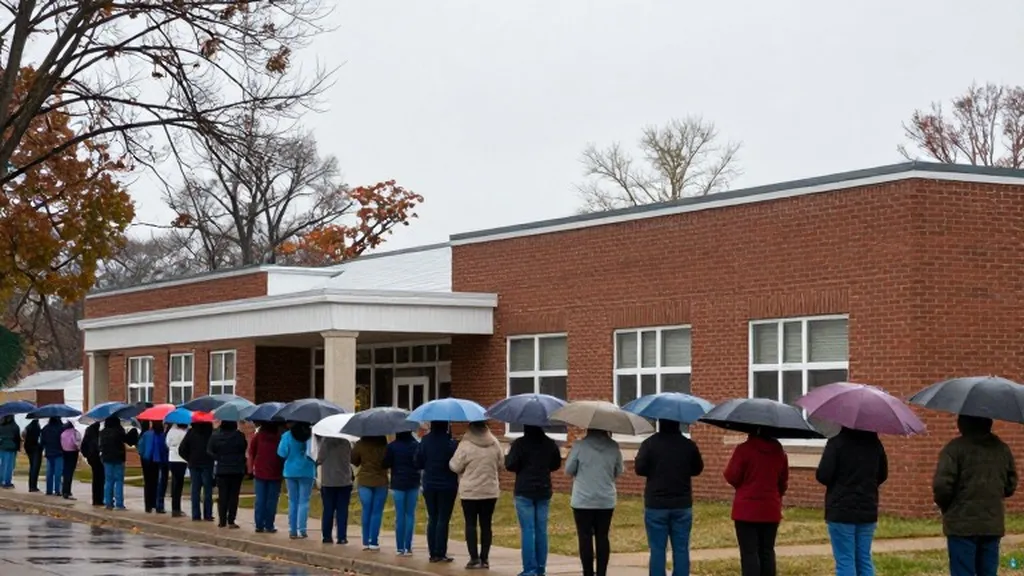
Voters across the United States are deciding the fate of thirty-six governorships on Tuesday, a race that has produced an exact 18 to 18 split between the two major parties heading into the polls. According to Ballotpedia, Republicans currently hold twenty-six governor’s offices nationwide while Democrats hold twenty-four, but the offices actually on the ballot this year are evenly divided. This balance means that Democrats need a net gain of two governorships to secure a nationwide majority, a position Republicans have maintained since 2010. The Associated Press describes the election as a referendum on President Donald Trump’s second term, with many voters expressing frustration over high prices and an unpopular war with Iran.
Nineteen of these governor races are open seats, meaning no incumbent is running for re-election. Ballotpedia notes that fifteen governors are term-limited, while Iowa’s Kim Reynolds, Minnesota’s Tim Walz, and Wisconsin’s Tony Evers chose not to seek another term. Rhode Island’s Daniel McKee did not appear on the general ballot after losing his primary. This high number of open seats introduces significant uncertainty into the races, as voters are not weighing a track record of performance in office against a challenger’s promises. The Associated Press reports that Republicans are bracing for potential losses in the House while fighting to hold the Senate, with one or two seats potentially tipping the balance of power in either chamber.
Nine states are identified as battlegrounds for governor: Alaska, Arizona, Georgia, Iowa, Kansas, Michigan, Nevada, Ohio, and Wisconsin. In these states, the outcome could determine which party controls a majority of governorships nationally. Republicans are defending two governorships in states that Kamala Harris won in 2024, specifically New Hampshire and Vermont, while Democrats are defending five governorships in states Trump won, including Arizona, Kansas, Michigan, Pennsylvania, and Wisconsin. The Associated Press highlights that economic strain and tariffs have made states like Maine and others competitive, reflecting a broader national mood where about seven in ten adults say the country is heading in the wrong direction.
In the Great Lakes and Ohio Valley region, specific dynamics are shaping the races. In Ohio, polls open at 6:30 a.m. and close at 7:30 p.m. local time. The governor race is an open seat, with Republican Vivek Ramaswamy facing Democrat Amy Acton. The Associated Press notes that Ramaswamy’s campaign faced backlash over an advertisement featuring Acton’s estranged mother. Ohio also has a Senate race, where former Democratic Senator Sherrod Brown is challenging Republican Senator Jon Husted. In Michigan, polls are open from 7 a.m. to 8 p.m., with both the Senate and governor races open. Republican former Representative Mike Rogers is running against Democrat Abdul El-Sayed for governor, with El-Sayed’s former primary opponent Haley Stevens endorsing Rogers on Sunday.
Kentucky and West Virginia also feature Senate races, though no governor races are on the ballot in those states. In Kentucky, polls open at 6 a.m. and close at 6 p.m. The Senate race is an open seat following the retirement of the incumbent. In West Virginia, polls open at 6:30 a.m. and close at 7:30 p.m., with incumbent Republican Senator Shelley Moore Capito running for re-election. The Associated Press points out that more than 57 million people had already voted as of Monday, surpassing early vote numbers from four years ago in many closely watched states. This high level of early voting suggests that turnout will be a decisive factor, a view echoed by Republican National Committee Chairman Joe Gruters, who stated that everything depends on turning out their voters.
The financial stakes of the 2026 elections are likely to be the highest in history, with Republican committees out-raising and out-spending Democratic committees at the committee level. This advantage was bolstered by Trump-affiliated groups and support from Elon Musk. However, at the candidate level, Democrats out-raised their opponents. An analysis by the Associated Press of AdImpact data shows that 88.1% of Republican general election television advertising spending went to states and districts Trump won in 2024. This includes more than $850 million spent in areas where he won by ten points or more, indicating a strategy focused on defending strongholds while competing in key swing states.
Voters are weighing the economy heavily in their decisions. The AP-NORC poll indicates that 35% of U.S. adults approve of Trump’s job performance, while only 25% approve of his handling of the economy. Most blame the president for high prices, a sentiment reflected by voters like James Moore, a librarian in Raleigh, North Carolina, who stated he is paying more taxes, more for healthcare, and more for everything. In contrast, Mark Barker of Palm Beach Gardens, Florida, expressed confidence in the president’s performance. These mixed opinions highlight the divided electorate that will determine the outcome of the thirty-six governor races and the broader control of Congress.
Election administration has been a point of contention, with a federal judge temporarily barring the Trump administration from carrying out a plan to prevent noncitizen voting. Critics argue this risks disenfranchising eligible voters, while the administration maintains it is a necessary safeguard. The U.S. Postal Service added hours, staff, and special lines to ensure mail ballots are counted on time. In Alaska, the Trump administration filed a lawsuit related to the certification of the Senate result, adding another layer of legal complexity to the election night. These legal battles may extend the time it takes to certify results in some states, keeping the focus on the governor races for days or even weeks.