Johnson warns of DSA chaos, points to France as cautionary tale for House race
The Speaker argues a narrow Democratic win would cede power to the left wing, contrasting that with a Republican record of tax cuts and border security in the closing hours of the Great Lakes election.
By Bianca Ricci ·
As polls open across the Great Lakes and Ohio Valley, House Speaker Mike Johnson is making a final, pointed argument for why voters should keep the Republican majority. In a USA Today op-ed published on October 30 and repeated during recent Fox News interviews, Johnson warned that a Democratic takeover of the House would not just mean new leadership but a fundamental shift in power dynamics. He specifically cited the influence of the Democratic Socialists of America, or DSA, arguing that even a narrow Democratic victory would leave the chamber held hostage by its far-left wing. Johnson’s message is urgent and personal, framing the midterms not merely as a choice of party but as a decision between common sense and what he calls absolute crazy.
In the op-ed, Johnson drew a sharp parallel to recent events in France, describing the country as a dark harbinger of what could happen in the United States. He pointed to the violent riots, looting, and destruction of public infrastructure in France as evidence of what happens when a government abandons fiscal restraint and border enforcement. Johnson wrote that the chaos in France is the inevitable result of decades of misguided policy choices, including lax immigration and suffocating regulation. He suggested that French leaders allowed their nation to be looted by far-left radicals, a scenario he believes is possible in America if Democrats control the House.
Johnson reinforced this warning on Fox News, where he stated that a Democratic Congress would result in chaos every day for the next two years. He argued that the current Democratic leadership has taken a far lurch to the left, making them more radical than the party was during the Obama and Biden-Harris years. On The Ingraham Angle, he noted that the polls are underestimating Republican enthusiasm and that voters are paying attention to the contrast between the two parties. He emphasized that every single vote matters, recalling that in 2024, ten House races were decided by 6,000 votes or fewer, a margin that could easily be flipped in today’s tight contests.
The Speaker also invoked the credibility of old-school Democratic strategist James Carville, who Johnson said admitted he would rather Republicans keep the House than Democrats win it by a small margin. Johnson quoted Carville’s line that the Democratic Party would be hostage to the DSA if it won, using the admission to validate his own concerns about the party’s direction. He argued that the DSA’s platform, which calls for eradicating borders and prisons and abolishing the Senate, is no longer fringe but is being welcomed into the party’s big tent by top leaders in Congress. This, Johnson claims, represents an unprecedented ceding of power to a socialist cadre that aims to remake the party and end the free market system.
Against this backdrop of potential chaos, Johnson is highlighting the specific legislative achievements of the current Republican majority. He points to the Working Families Tax Cuts, which he says delivered an average of $10,900 in additional take-home pay for a family of four. This includes no tax on tips and overtime, a larger standard deduction, and an expanded child tax credit. Johnson credits these measures with helping to bring down costs and cut taxes in what he calls the largest tax cut in U.S. history. He argues that these are tangible results that voters can feel in their bank accounts, unlike the rhetoric of the opposition.
The Speaker also emphasized the House’s success in securing the border and reducing wasteful government spending. He noted that Republicans cut $1.6 trillion in federal spending and are unleashing American energy dominance after years of Democratic efforts to choke off domestic production. Johnson pointed to the addition of more than one million private sector jobs and the reshoring of American manufacturing as proof that pro-growth policies are working. He contrasted this record with the Democrats’ record of inflation and high prices, arguing that voters remember being silenced as left-wing ideologues wrecked their schools and communities.
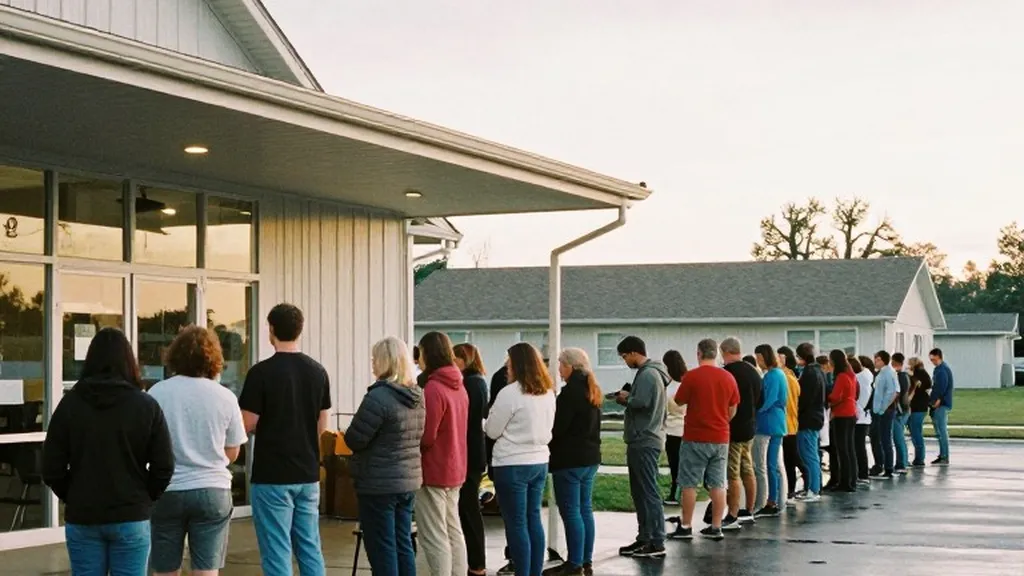
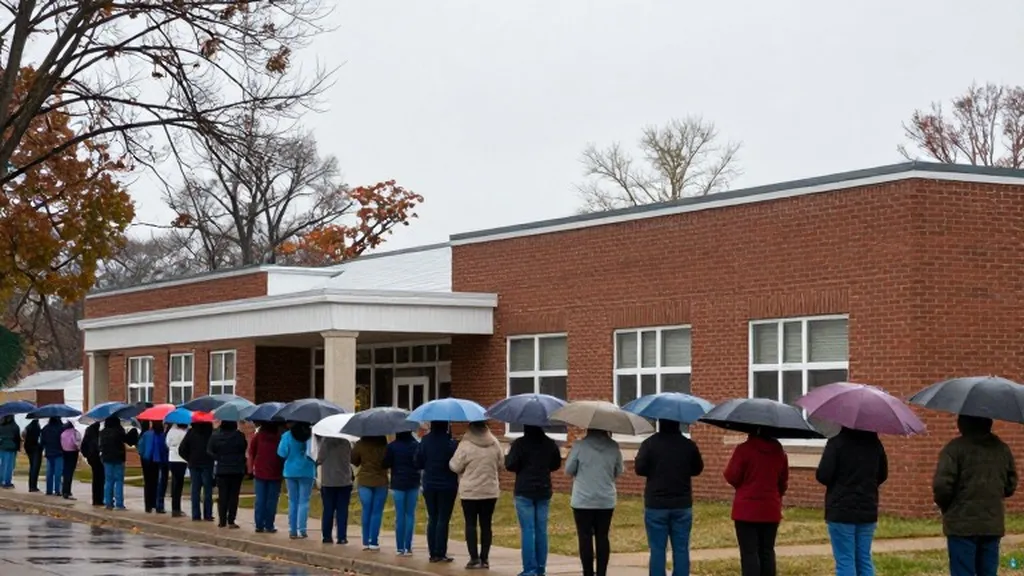
In Ohio, voters will cast ballots between 6:30 a.m. and 7:30 p.m. local time. The state faces a critical race for the governorship, an open seat that could shift the balance of power in the region. There is no Senate race in Ohio, but the outcome of the House districts will determine which party controls the chamber for the final two years of President Trump’s second term. In Michigan, polls are open from 7 a.m. to 8 p.m., with both an open Senate seat and a governor’s race on the ballot. The state’s proximity to the Great Lakes makes it a key battleground for agricultural and industrial voters who are watching the economy closely.
In Kentucky, polls open at 6 a.m. and close at 6 p.m. The state has an open Senate seat, as the incumbent is not running again. There is no governor’s race in Kentucky this cycle, but the House races will be closely watched. In West Virginia, polls are open from 6:30 a.m. to 7:30 p.m. The state is holding a Senate race where incumbent Shelley Moore Capito is running for re-election. There is no governor’s race in West Virginia. These four states represent a significant portion of the Republican base and are crucial for maintaining the party’s slim majority in the House.
Johnson’s campaign has been focused on the idea that this is a contrast election. He argues that Republicans have delivered on their promises, bringing down costs and making streets safer, while Democrats have voted against these measures. He is traveling nonstop, having visited more than 40 districts in 22 states in just the last month. He is in Cincinnati, Ohio, where he is supporting candidates who he believes will flip blue seats to red. He describes the candidates as extraordinary and superior, saying that the American people know the Republicans have a better record to run on.