Midterm Pattern: Both Parties Race to Break the House and Senate Rules
Republicans aim to hold the Senate while Democrats target the House, setting the stage for a decisive vote on President Trump's second term.
By Chloe Martin ·
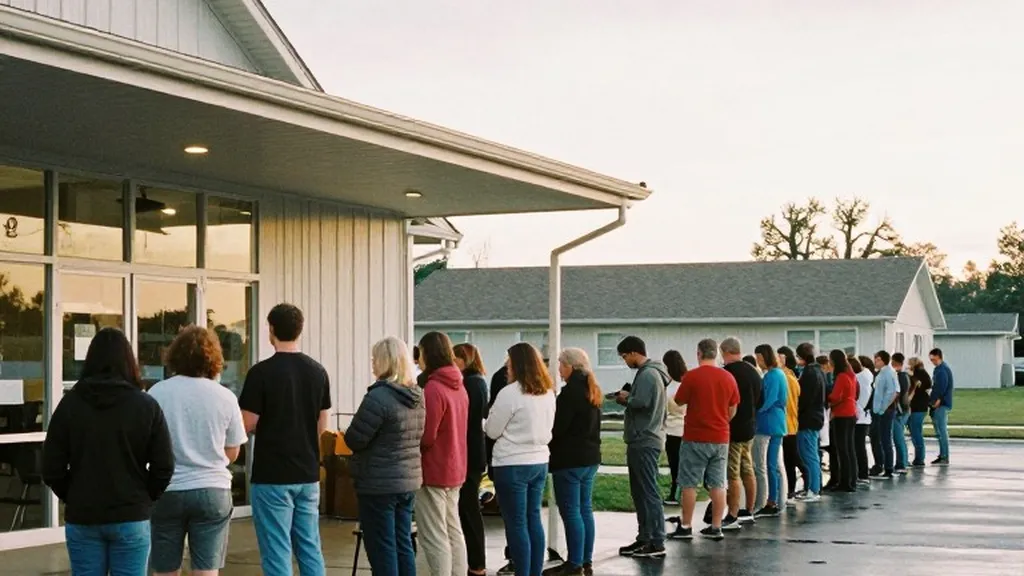
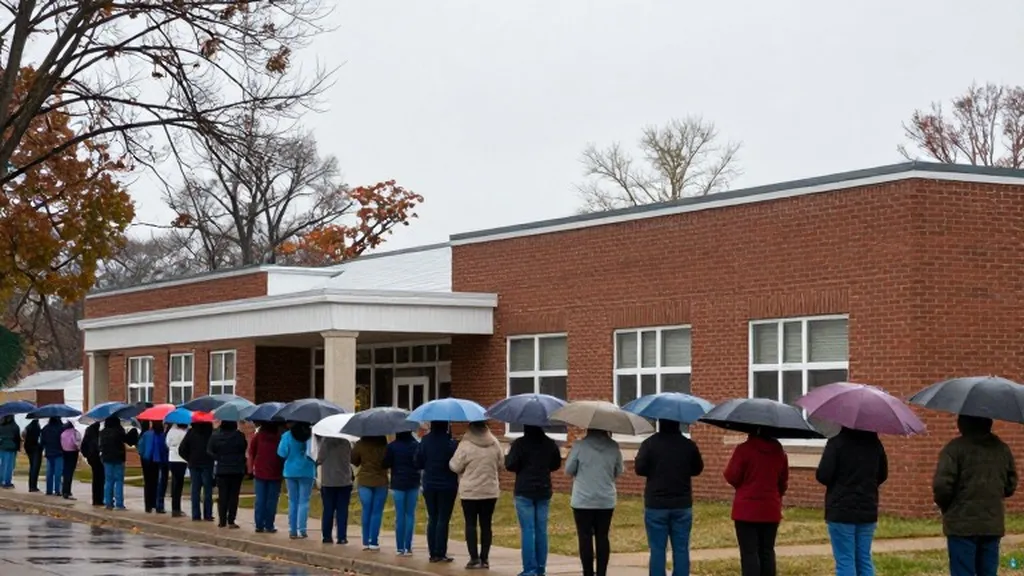
Voters across the United States are casting ballots on Tuesday, November 3, 2026, to decide which party will control Congress for the final two years of President Donald Trump's second term. The Associated Press describes this election as a referendum on the president's performance, with many citizens citing high prices and an unpopular war with Iran as primary drivers. Polls are open in key states including Ohio, Michigan, Kentucky, and West Virginia, where specific times vary from 6 a.m. to 8 p.m. local time. The outcome will determine whether Republicans can maintain their grip on power or if Democrats can seize a legislative advantage.
Historically, a president's party almost always loses seats in midterm elections. This year, both political parties have implemented specific strategies to overcome this long-standing trend. Republicans are focusing heavily on holding the Senate, where they currently hold 53 seats. They can afford to lose only two seats to maintain their majority. Democrats, holding 45 seats plus two independents, need a net gain of four seats to take control of the upper chamber. The stakes are high, as a shift in either chamber could trigger new investigations and oversight measures.
In the U.S. House of Representatives, all 435 seats are up for election. Republicans currently hold 218 seats, while Democrats hold 214. Democrats need a net gain of just three districts to achieve a majority. Republicans can lose no more than two seats to keep control. Ballotpedia identifies 46 battleground districts, including 25 held by Democrats and 21 by Republicans. Notably, 21 districts currently held by Democrats voted for Trump in the 2024 presidential election, suggesting potential shifts in voter alignment. Republicans have tried to use redistricting to their advantage, with new maps in states like Florida and Texas potentially influencing the final count.
Governor races are also critical to the midterm pattern. Republicans hold 26 governorships, and Democrats hold 24. In the 36 races on the ballot, each party holds 18 offices. Democrats hope to win a net two governorships to achieve a nationwide majority for the first time since 2010. In the Great Lakes region, Ohio and Michigan have open governor races. In Ohio, Republican Vivek Ramaswamy faces Democrat Amy Acton. In Michigan, the race is between Republican former Rep. Mike Rogers and Democrat Abdul El-Sayed. These races are seen as indicators of the broader party performance in swing states.
The Senate races in the Great Lakes and Ohio Valley regions are particularly tight. In Michigan, the open seat is rated a toss-up to lean Democratic by major ratings services. In Kentucky, polls are open from 6 a.m. to 6 p.m. for a Senate race with an open seat. West Virginia has an incumbent, Shelley Moore Capito, running for reelection. The Associated Press notes that economic strain and tariffs have made states like Maine competitive, where incumbent Susan Collins faces a strong challenge. In Ohio, a special election is being held for the seat of JD Vance, pitting Democrat Sherrod Brown against Republican Jon Husted.
Voter turnout is a central theme in the campaign. RNC Chairman Joe Gruters stated that everything depends on turnout, emphasizing that if Republicans turn out their voters, they will win. In contrast, DCCC Chair Rep. Suzan DelBene highlighted that the American people are angry and want change. As of Monday, more than 57 million people had already voted, surpassing early vote totals from four years ago in many closely watched states. This high level of pre-election participation suggests that the final tally will be closely contested, with one or two seats potentially tipping the balance in either chamber.
Financial spending has also reached record levels, with the 2026 elections likely to be the most expensive in history. Republican committees outraised and outspent Democratic committees, aided by groups affiliated with President Trump and Elon Musk. However, at the candidate level, Democrats outraised their opponents. According to an AP analysis of AdImpact data, 88.1% of Republican general election TV ad spending went to states and districts that Trump won in 2024. This targeted spending reflects a strategy to consolidate support in Republican-leaning areas while defending key seats in the Senate.
Public opinion polls provide a snapshot of the mood heading into Election Day. AP-NORC polling indicates that 35% of U.S. adults approve of President Trump's job performance. Only 25% approve of his handling of the economy, and about 7 in 10 say the country is heading in the wrong direction. Most respondents blame the president for high prices. These figures underscore the challenges facing Republican candidates, who must convince voters that the administration's policies are effective despite widespread dissatisfaction with the cost of living.
Election administration has also been a point of contention. A federal judge temporarily barred the Trump administration from carrying out a plan to prevent noncitizen voting, a move critics say risks disenfranchising eligible voters. In California, a judge ordered the administration to stop demanding that election officials segregate ballots cast by people on lists of suspected noncitizens. The U.S. Postal Service added hours and staff to ensure mail ballots are counted on time. These legal and logistical developments add layers of complexity to an already high-stakes election, with Wall Street watching closely for signals on debt ceiling negotiations and AI spending.
In the Great Lakes region, voters in Ohio will cast ballots from 6:30 a.m. to 7:30 p.m. to decide the governor's race and the special Senate election. In Michigan, polls are open from 7 a.m. to 8 p.m. for the open Senate seat and governor race. Kentucky polls close at 6 p.m. for the open Senate race. West Virginia polls are open from 6:30 a.m. to 7:30 p.m. for the Senate race involving incumbent Shelley Moore Capito. These states are pivotal in determining whether the midterm pattern will be broken or upheld, with every seat counting in the final tally for congressional control.